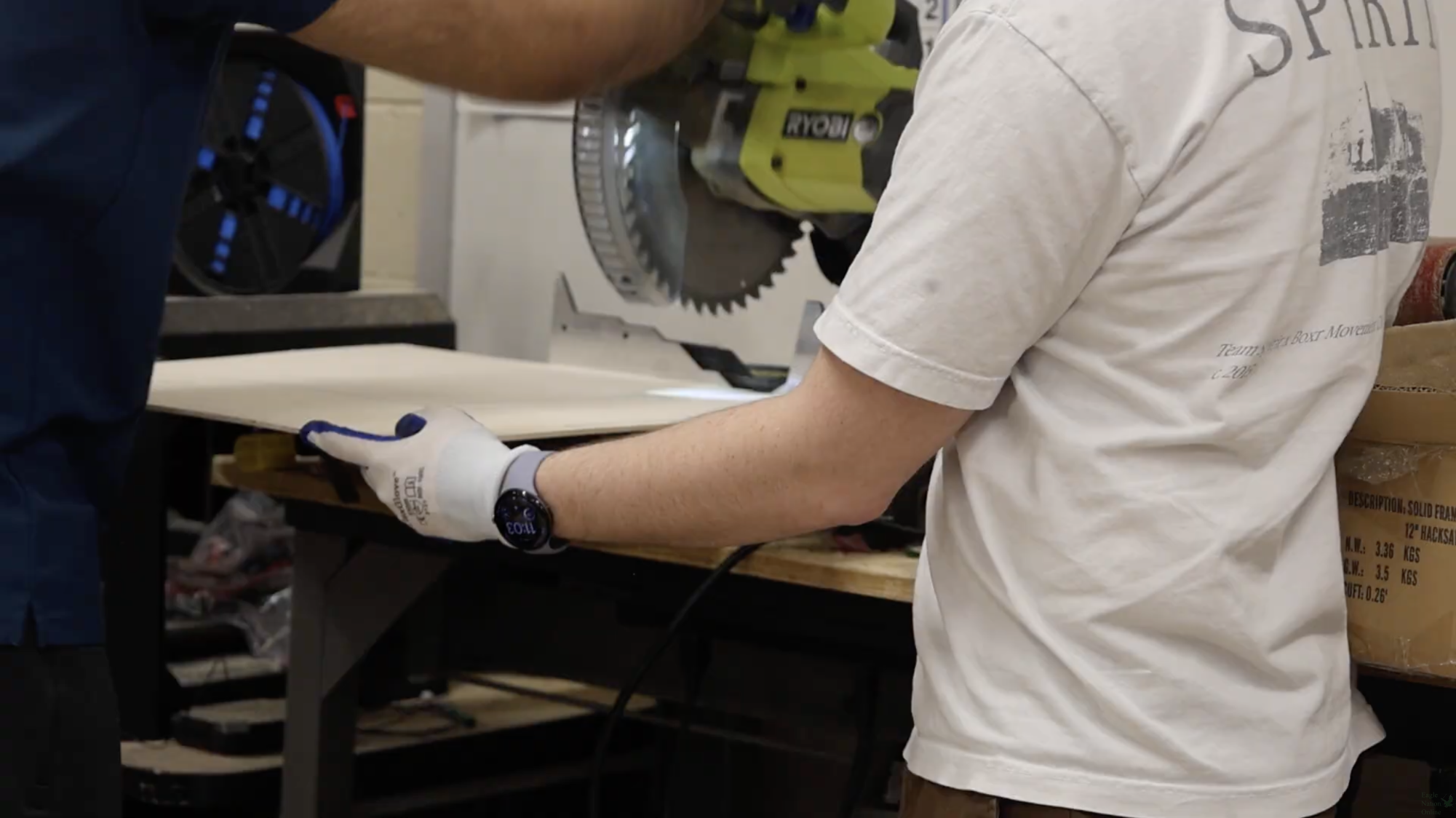


Our team went out and created a video package about the principles of applied engineering. Reporter Agnipravo Ghosh, Jakobe Whale and video editor Adnen Agoh each contributed in their own ways to the completion of this video package. The class was preparing and constructing builds for their Mystery Machine project, in which they invented their own useful innovations deriving from only a few fundamental mechanisms.
Engineering teacher Lucas Best instructs principles of applied engineering and engineering science, both coming from his love for the subject. Something that really distinguishes Best’s class from others is his hands-on learning environment. Best has the following to say about this decision.
“So I chose to teach engineering because when I was in high school and college, I was a really ‘bad student,'” Best said. “I was really bad at ever listening to lectures. I couldn’t focus well in classes that were just Power Points. So I chose to go into teaching, go into engineering, because I thought that I could provide students that learn like me with a better opportunity to to get to actually build stuff and feel like they were at home in engineering.”
Sophomore Om Patil really appreciates the education structure that Best has established to help him with future courses and potential careers.
“What made me take principles of [applied] engineering [was that] I want to take robotics next year,” Patil said. “So, I took this class as a prerequisite.”
Likewise, freshman Joseph Singleton’s interests were sparked and he formed new hobbies in the class, which would not be possible without Best’s tactile lessons. He expresses his favorite activities from this class.
“I have enjoyed learning about circuits as well,” Singleton said. “But nothing could top 3D modeling, personally.”
Best also believes that he can make students feel captivated through fun sessions and incorporating competition, instead of just reading off of a slideshow or rigid requirements, allowing students to be more creative and express their own components on designs or projects.
“I think my role in the class is making lessons engage the students, I think that’s my number one job,” Best said. “So a big part of what I try to do is make every lesson have some buy-in. I don’t want to ever just be throwing someone in front of students for them to do, I wanna make sure it’s something they are invested in, something they are excited about, something that they can actually build and create. But I think having a little bit of competition can be fun too.”
Many students took principles of applied engineering to develop or build upon skills in construction, design and team cooperation. With the help of Best, these goals can become reality and these students can explore many more career options.
This article was edited by Amelia Hamilton, Kate Duncan and Victoria Byers.