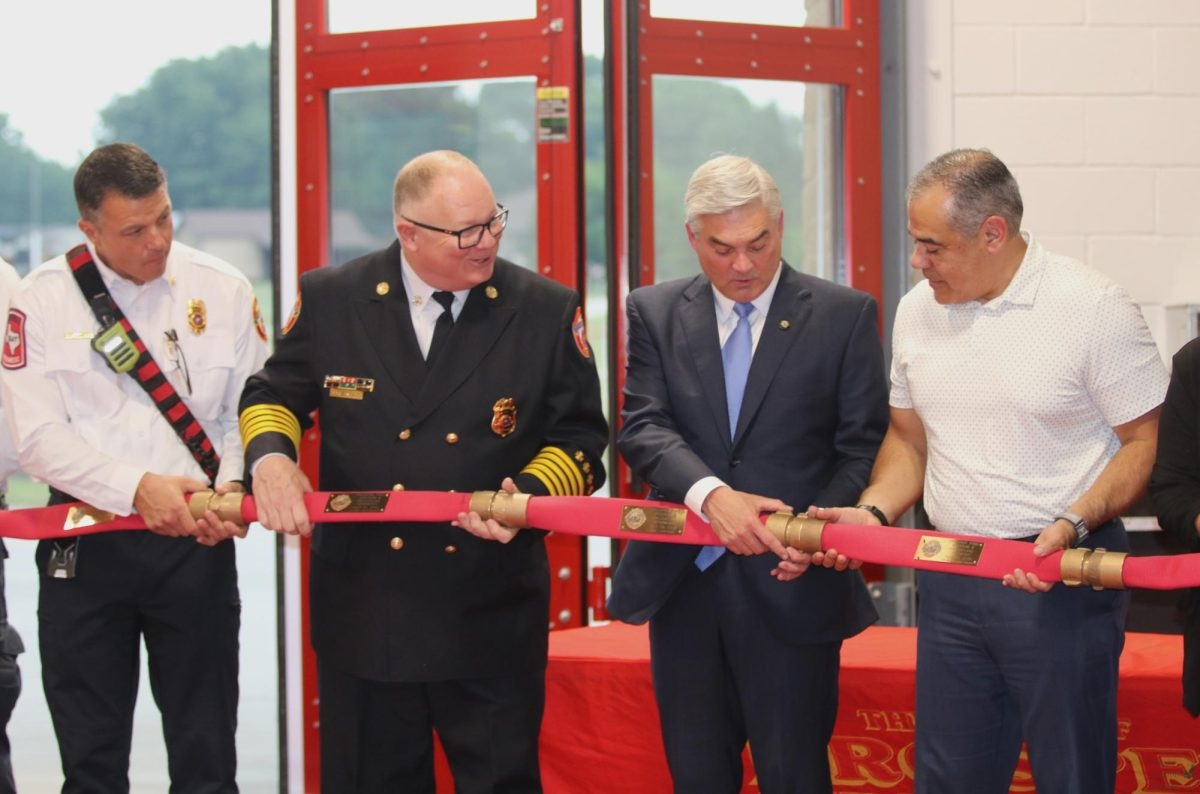
In an emergency, response times can make the difference between life and death. Fire Station 4 is expected to reduce these times by six to eight minutes.
As Prosper’s population continues to grow, the need for accessible, timely and effective emergency services has grown with it. To meet this demand, Prosper Fire Rescue celebrated the opening of the new fire station with a public dedication ceremony on April 28.
“This new station is a testament to the strength and unity of Prosper,” Public Safety Chaplain John Herring said. “It reflects shared values and commitment to ensuring that every resident, no matter where they live in our town, has access to critical emergency services.”
What began as a volunteer fire department in 2004 for a population of 4,000 has evolved into an organization overseeing the safety of over 40,000 people. To accommodate this increase, the 12,212-square-foot facility is responsible for the east side of Prosper, located at 3980 E. Prosper Trail.
“These resources will strengthen Prosper Fire Rescue’s emergency response network, expand coverage on the east side and help ensure residents receive the timely, high-quality service they deserve,” Herring said. “Fire station 4 reflects the town’s dedication to preparing for growth while continuing to deliver reliable and responsive emergency services.”
The total project budget is approximately $13.8 million, with about $11.6 million accounting for the station’s construction. Remaining costs covered design, development and equipment.
“Every time this community invests in public safety, you are investing in people,” Fire Chief Stuart Blasingame said. “You are investing in faster response times, better service, safer neighborhoods and better outcomes when someone’s having one of the worst days of their life. They don’t call us when they’re having a good day. You can, we’d love to say hi, but very seldom do they.”
The station includes five fire engine bays and sleeping quarters for up to eight firefighters, a captain’s office, conference room, workout room and a kitchen built by Chandler Cabinets. Community members toured the department and observed fire vehicles at the ceremony.
“To see the four stations built and now open is pretty exciting,” Battalion Chief Scott Diliberto said. “I didn’t do anything personally, but the architects, the chiefs, the town council, the design, the preparation of this building, the guys that work here in this building, they’ve cleaned it, got it all set up. They set up the chairs, the tables, everything you see here. So a lot of hands went into getting this ready for today.”
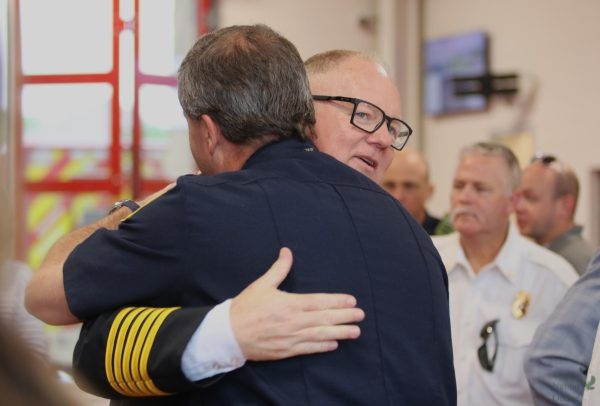
Representatives from Chandler Cabinets, including employee Maggie Cabin, were present and recognized at the event for their contributions to the department.
“(My role was) just like communication and stuff with Jason Graham,” Maggie Cabin, Chandler Cabinets employee, said. “And then just doing the design and everything (on) the table.”
The station is to extend its emergency coverage in early 2028 with a paramedic engine company — a fire engine with at least one firefighter or paramedic equipped with Advanced Life Support gear — to aid during ambulance response.
“We look forward to expanding that coverage with an ambulance to also be housed here,” Diliberto said. “That matters. It matters to the family who calls 911 because a loved one is having chest pain. It matters to the parent whose child is struggling to breathe. It matters to the homeowner who smells smoke in the middle of the night.”
The bond committee first assessed the opening of Fire Station 4 in 2010. With the combination of more than 15 years of planning, staff, residents and elected officials who believed that Prosper’s northeast corner deserved the same level of public safety attention as the rest of the town, the opening of the station was made possible, according to the Town of Prosper’s official website.
“This project is more than just bricks and mortar,” Mayor David Bristol said. “It’s a manifestation of many years of promises being kept. With the opening of this fire station, we can serve our residents so much faster, and in some cases, six to eight minutes faster.”
This article was edited by Emily Logan, Grace Suzuki and Yousuf Ali.