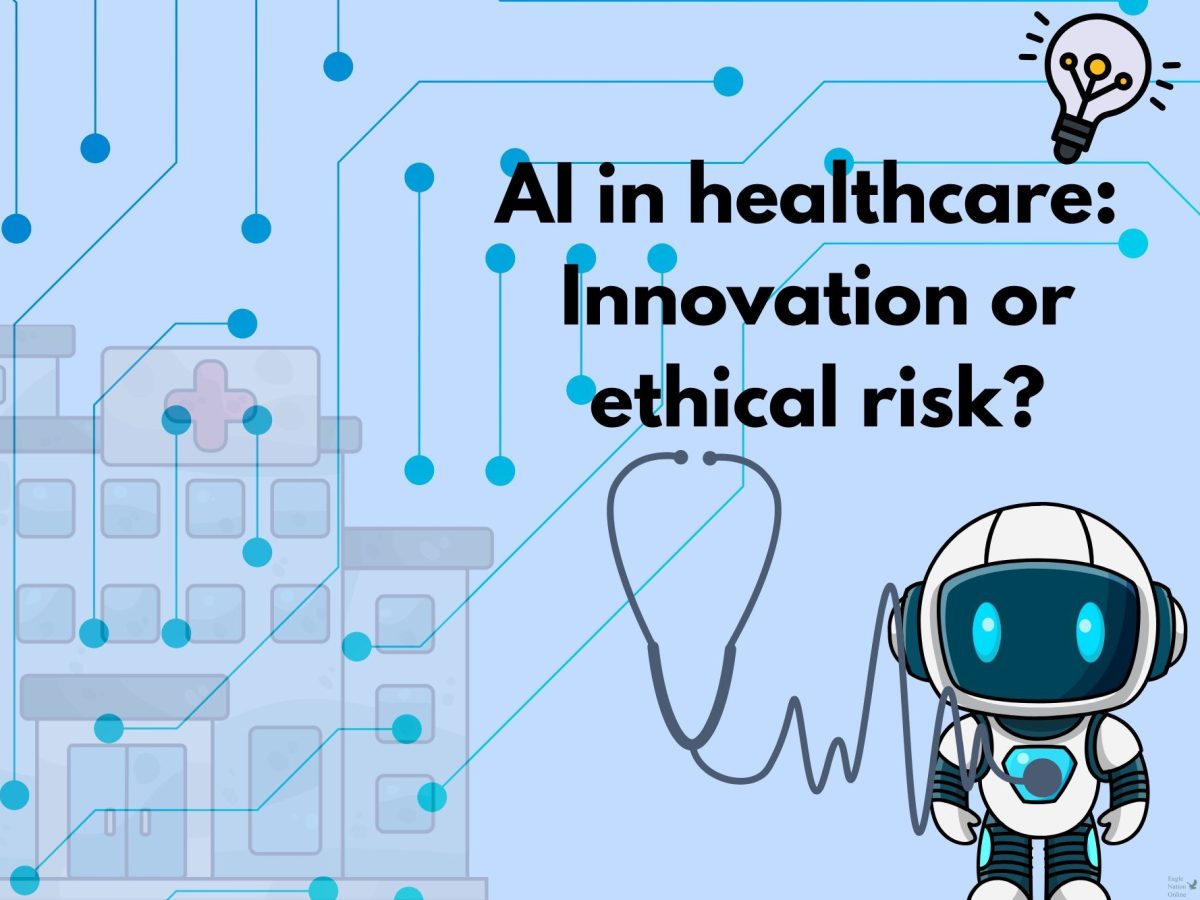
AI – a term that people have been using over and over to describe new innovations in the last few years. But, it’s more than just another form of Google or a way to plan out your day. A more interesting way that artificial intelligence has shown up in the last decade is in the medical field. What does this mean for healthcare professionals and patients who are seeking medical attention? What about ethical concerns? Everyone has a different way of contemplating these dilemmas. Diagnosing patients takes preciseness and a plethora of knowledge to adequately address the needs of a person who requires medical attention. But what about AI?
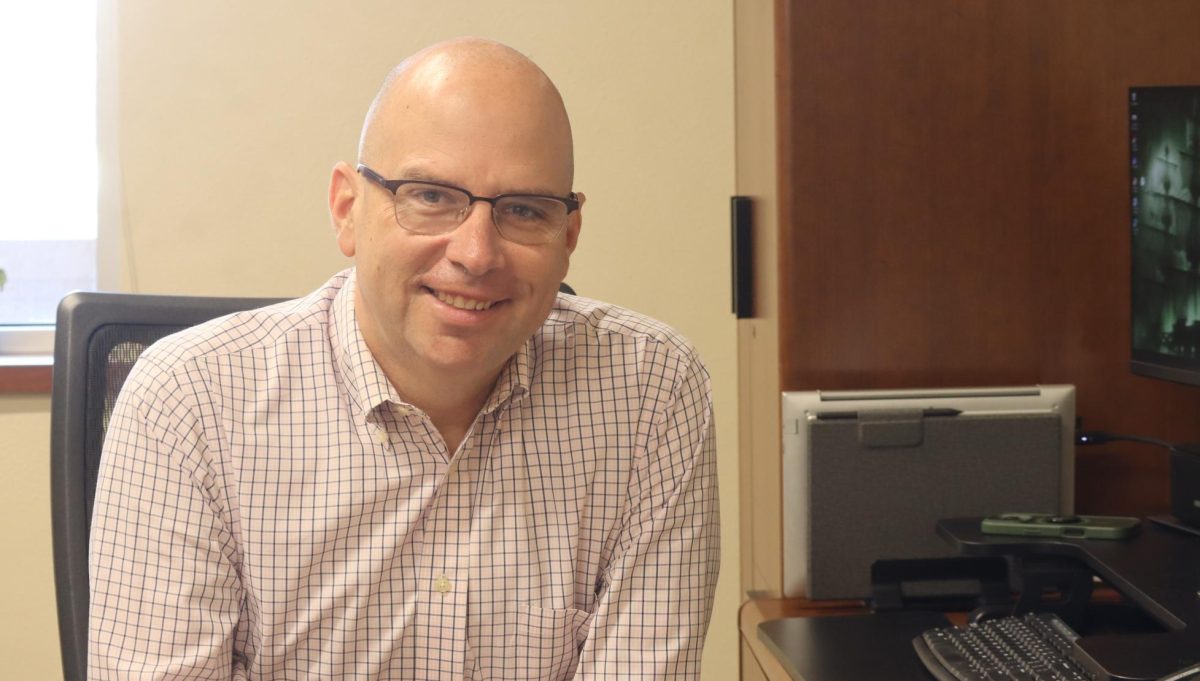
Kelli Factor, a previous nurse currently working at Prosper High School, has a say regarding the matter.
“I think it would be a good starting point, but I don’t think it’s good for deep diagnosis,” Factor said. “AI is not going to know the medical history, so even though it may give you some good starting points, I don’t think it’s going to be good in long-term care.”
Beyond diagnosis, concerns about empathy are prevalent. Senior Manha Mohammad, a student taking EKG at Prosper High, explains this as well.
“It doesn’t have emotion,” Mohammad said. “It can’t connect with the patient. The patient isn’t going to feel safe in the hands of AI compared to a human diagnosing.”
Ethics also raises many concerns about how and why a patient would be diagnosed or treated. Another question raised is if artificial intelligence is able to be emotionally aware.
“I think it’s unethical, because the doctor should be well-versed in how to care for the patient,” Factor said. “I really think that we have to be super careful and have a good ethical relationship with our patients. Know their culture, know their background, know their genetics.”
Some other issues may delve deep beyond just knowing the patient.
“One major concern in my opinion is privacy,” Mohammad said. “AI can be really easy to hack so anyone who wants to do it could do it. It really creates more ethical dilemmas and debates about trust and responsibility.”
Reading multiple scans and detecting diseases is another part regarding AI as an assistant in the healthcare field. AI can be great at detecting diseases and patterns throughout a scan. Radiologists interpret medical images consistently, but what if AI was there to help? Furthermore, what are the negative effects of using AI?
“I think AI could help in that area, for radiology, it’s a technical field and it uses technology,” Factor said. “So I think for it to read a scan, it could possibly detect, but what if it misread it? The physician would have to know what’s going on, for the physician and the AI to help each other.”
There are some other concerns raised about this topic.
“There are huge risks of large-scale errors,” Mohammad said. “If there’s even a slightest mistake, that could cause huge very grand problems for the patient.”
The future always holds more, and artificial intelligence is included in that future.
“If you’re in a particular part of medicine, I think it’s going to be helpful to help you create things to study with or to maybe point you in the right direction,” Factor said. “It’s just going to keep growing and growing. It does scare me that they’re going to use it too much in medicine. Because like I said, I say this every day, you can’t be in surgery and say, ‘I should ChatGPT how to fix this heart.’”
AI as a powerful tool — however, being over-reliant on it isn’t a wise choice.
“I think that in the next five to 10 years, artificial intelligence, it’s going to be the next big thing,” Mohammad said. “AI, it’s too big of a risk to be used in the healthcare field, and if it’s used to a minimum, it’s fine.”
These concerns are completely valid and deserve thought — however, we also cannot ignore the great benefits of AI in healthcare. The conversation of AI should not end in negativity or in agitation, but also regarding the astonishing achievements that AI has done. Artificial intelligence is made to assist as well.
X-rays, diseases and other medical terminology can be identified with AI models. The National Library of Medicine reports a study in which ChatGPT had a high percentage of recognition among multiple X-rays. When used correctly and responsibly, artificial intelligence can serve as a fresh perspective that can support medical professionals to come to a conclusion. The real concern is how AI is used, not if AI is used.
Artificial intelligence can help physicians, not replace them. Medical professionals should always be the finalizers of medical conclusions. However, AI can be used as a tool to enhance efficiency and support medical professionals.
It was never AI versus humans, rather, it was humans working with AI.
This article has been edited by Victoria Byers, Kate Duncan and Emily Logan.