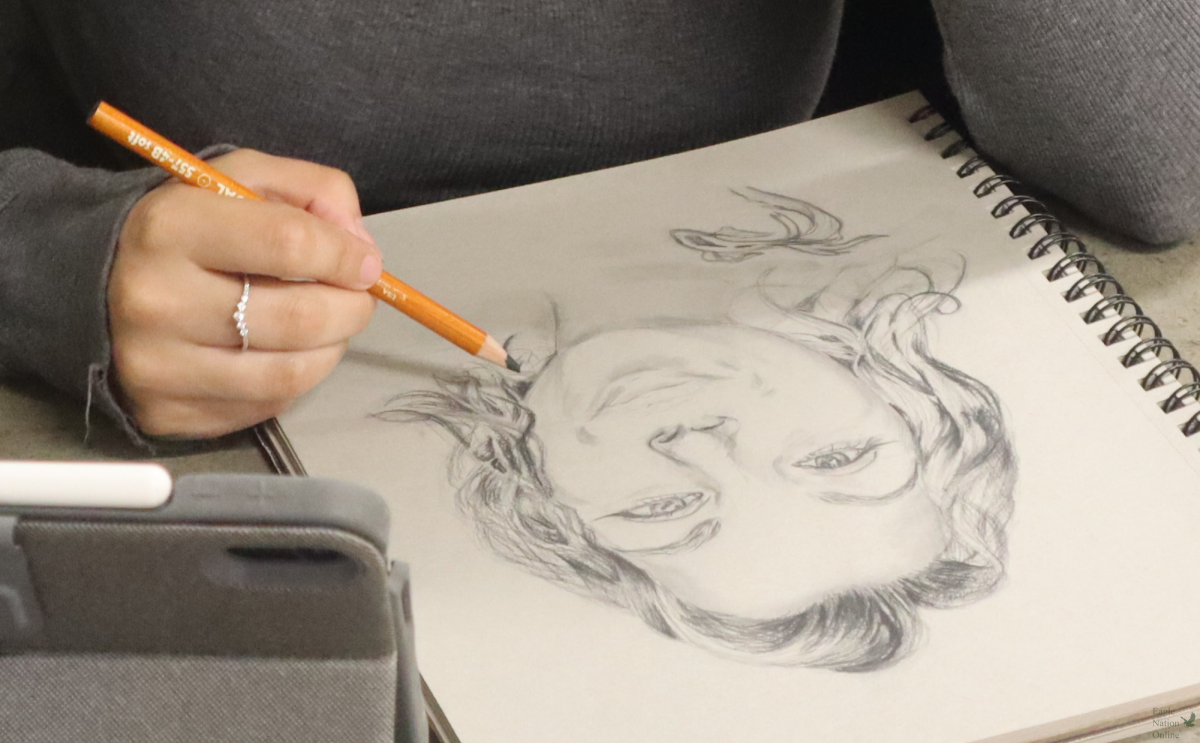
How do I get a job? What are employers looking for? How do I show what I do? These are just some of the questions I’ve asked myself during my job search. Finding a job in your field can be and usually is a very difficult task. Not being able to properly pitch yourself halts your job opportunities. Employers really want to know who they’re hiring and what you’re best at. This is where a portfolio comes in. A portfolio is a compilation of all your best works relating to your specialty and shows who you are.
If you’ve ever taken a design or art class, you’re probably aware of what a portfolio is. Since my middle school video production class, I’ve made websites to show my work. At that time, I used Google Sites. It was a simple start and taught me the basics of what should be in a portfolio. Ever since, I’ve made various renditions for other classes like Digital Art and Animation, 3D Animation, Graphic Design and now on the news team. With each one, I was able to learn crucial design skills and become more efficient at showing what’s important. Even though it’s crucial for someone in the design field to have a portfolio, it’s not limited to only them. Any and all careers can utilize it, because when do you not need to pitch yourself for a job, that’s what the portfolio does for you in a nutshell. Now that I’m close to graduating and wanting to get a job to pursue my graphic design career, it was important for me to make a professional personal portfolio. The platform you decide to make it on isn’t that relevant, but it’s best you choose something that you’re comfortable with. I started with WIX, but it was too much for me due to the overwhelming amount of buttons, so I went with Carrd. It provided a very simple UI (user interface) for me to work with and gave me a lot of creative freedom.
To make the best pitch for yourself, you want to make sure your portfolio isn’t too bloated and only includes the most necessary information. Be sure to provide your best work and a thorough explanation of what you learned and/or challenges you encountered while working on the project you’re presenting. This shows the human side of you and how you can overcome challenges. Employers want someone who can adapt and defeat the toughest of problems. If your projects show that, the chances of you getting that job greatly increase. In my portfolio, I have a few different tabs. The three most important ones are the “About Me” tab to show a little about who I am, a design page to show the type of work I do and an actual resume page for employment information. These are three fundamental pages you should include in yours too.
You’re not done yet — make sure to put your portfolio out there. You want to make sure people can easily find you, so link it to your socials and add it to your job search bios. Without a place to gather all this information about me and my craft, I wouldn’t have the opportunities I have today. Ready to build your own portfolio? Here are a few of my favorite resources to help you start your build, refine your story and get your work in front of the right people.
My Portfolio:
Helpful Links:
This article was edited by Trisha Panicker, Kate Duncan and Sahasra Kandiboyina.