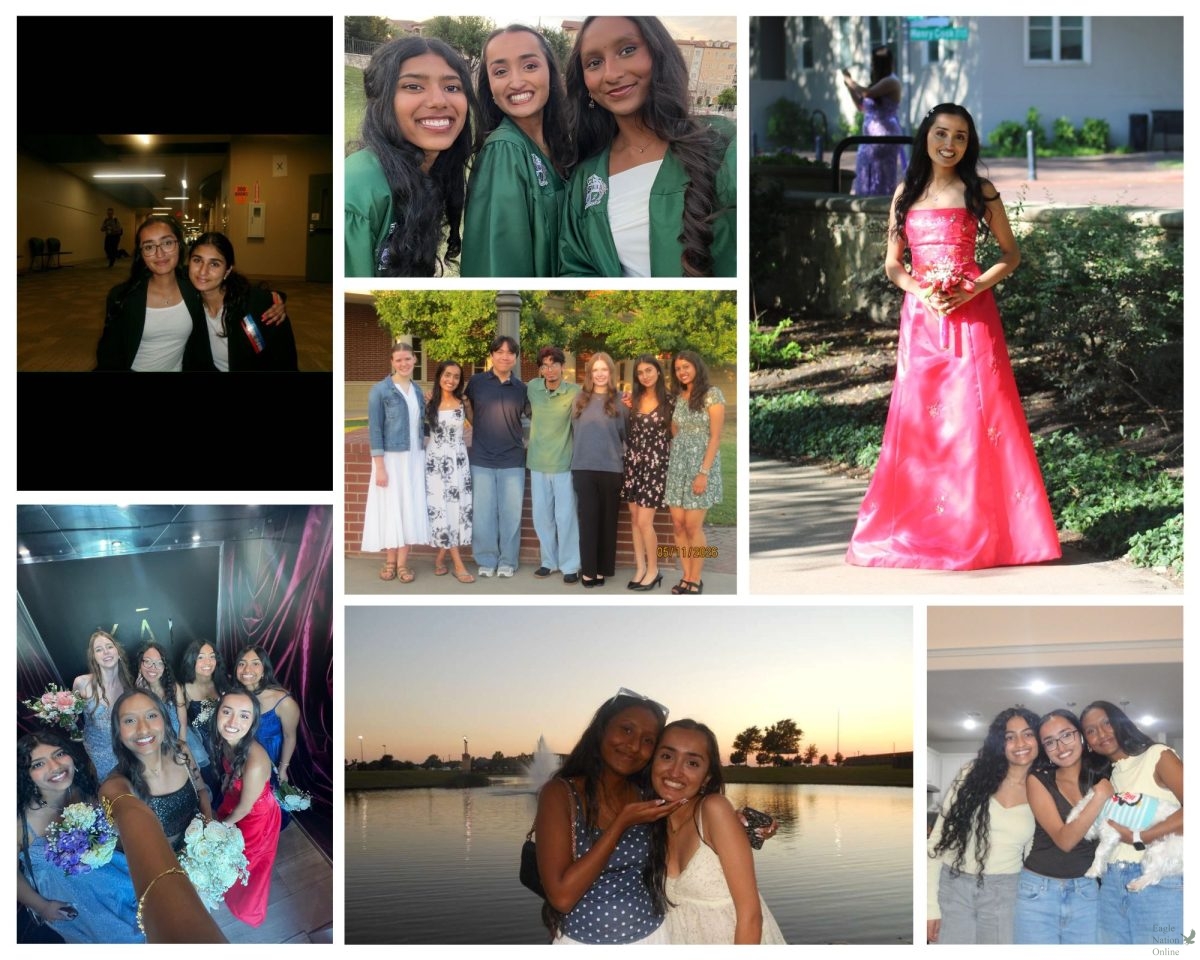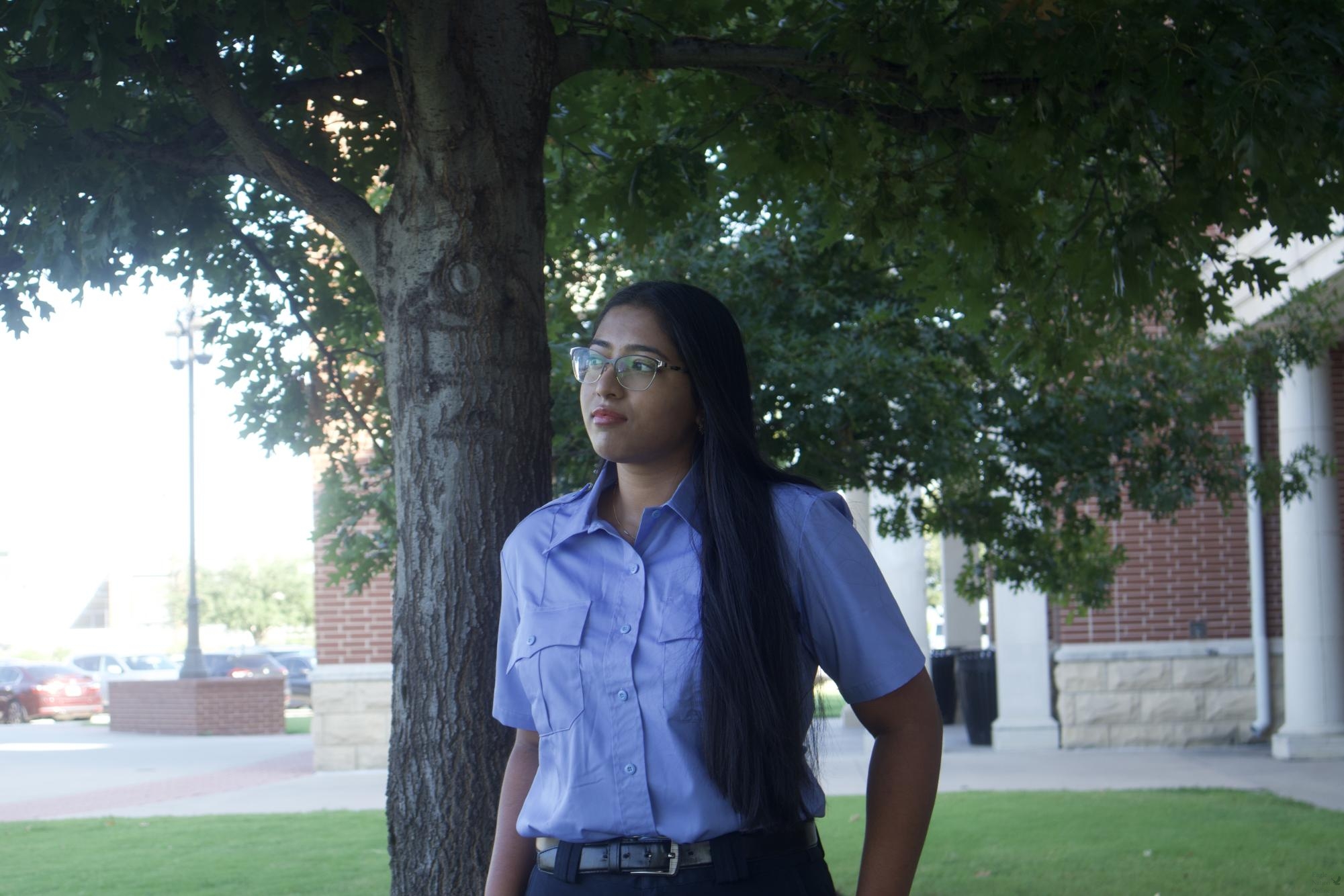

Born as Neeharika and called ‘Lucky’ by her friends, senior Neeharika ‘Lucky’ Alapati is working hard to find relief for epilepsy as she studies to become an Emergency Medical Technician (EMT) in school.
Alapati knew she wanted to become an EMT because of a close family member who suffers from epilepsy – a condition where seizures are caused by being exposed to too much light or many sounds. She equates the disorder to when neurons get too excited and therefore short circuit, like when a phone shuts down for a second before powering back on.
“For people, there are various levels of it,” Alapati said. “My family member, she doesn’t have ‘as bad’ ones. Her face twitches a bit and then muscles contract. But for some other people, they see those cinematic seizures, you know, they fall down and everything. So I mainly had to help manage medication for this family member.”
As she helped her family member with their medication, Alapati started to conduct her own research on it to help with the condition, leading her to what she’s currently studying – epileptic seizure detection devices.
“I mainly started this in PCIS with Mrs. Ballard,” Alapati said. “I love her. She’s so nice. I wasn’t sure where I wanted to get started. I just knew I wanted to do something related to epilepsy, because I’ve been exposed to it so much.”
After continuing with her research, Alapati found that devices used to detect seizures weren’t very accurate.
“When they were accurate, they were huge, chunky devices, which not everyone wants to wear those types of stuff, because, you know, they may not want to show that they have this and all that,” Alapati said. “So I thought I would do my own research into it and try to make the most accurate device on a smaller scale.”
To make this possible, Alapati found a mentor from Austin College through PCIS.
“I went to this college council, this college fair, it was at Walnut Grove, and I was already kind of researching colleges at that point in time,” Alapati said. “So I went to go talk to the school, Austin College, and the regional readers that usually go there. The assistant dean of admissions was there, so I ended up talking to him, and he connected me to my professor.”
However, Lucky believes that none of what she’s currently doing would be happening if it weren’t for one thing – her parents.
“They’re very concerned for my mental health,” Alapati said. “They want me to take my life as easy as possible. So when I told them that I wanted to go to med field, they were like, are you serious about this? And they were supportive, but they just wanted to make sure that I wouldn’t drop out halfway.”
So, they took her to India where she shadowed some doctors, including cardiothoracic surgeons, and had the opportunity to watch cardiothoracic surgery.
“From there on, they kind of realized that I was serious about this, considering the fact that I wasn’t weirded out by surgery or anything,” Alapati said. “So I came here, and then I started doing a similar thing, kind of, but this summer, I got into an internship with a clinic nearby.”
At her internship, Alapati says she got the opportunity to do a lot of cool things.
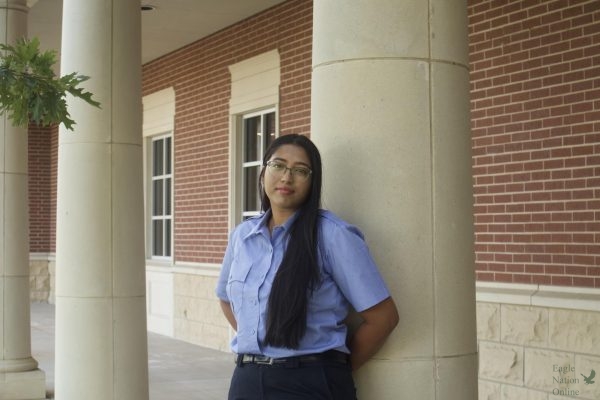
(Kate Duncan)
“They let me help do the EKGs like, obviously, under supervision,” Alapati said. “I prepared vaccines, and then I entered a medical history into charts and everything, I took vitals and I was able to help out with some wound procedures as well.”
Alapati says she learned something very important at her internship this summer – that community isn’t limited to family.
“There was this elderly couple who came in and this was actually the same couple that I worked on for wound procedures,” Alapati said. “They didn’t have kids but still almost six of their neighbors showed up, and that was the moment I really learned what family truly was – not just those related by blood, but by those who care enough to show up.”
Along with partaking in her internship and researching epileptic seizure detection devices, Alapati is a student ambassador where she helps new students integrate into PHS – sitting with them at a designated lunch table during the first two weeks of school and helping them with their courses throughout the year.
“So I’ve been a student ambassador for about two years now, and it’s really great,” Alapati said. “We mainly just work on welcoming new students, because I know the transition can be kind of hard. As someone who’s went to over nine different schools, I can understand them on the transition point. It’s gotten easier for me since I’ve done it a lot, but for some people, it’s their first time, and that can be really, really scary, so I try my best to be just as friendly and outgoing as possible.”
Alapati says her experience with changing schools more than nine times was difficult, but got easier with time.
“I started off with Hampton elementary school back in Pennsylvania, Pittsburgh, and then I went to a private Christian Academy, Aquinas, and then I went back to that public school, and then I went to a charter school in seventh grade,” Alapati said. “Seventh and eighth grade were online, so that was fine. And then I moved to India because my brother had some things going on, so we had to go there for six months.”
Because she was worried about going to an international school in India since she felt like her accent was “too American,” she did virtual school instead.
“I did online school for about six months (for) my first semester of freshman year, and then second semester I was at Lebanon trail in Frisco before we were able to get the house and everything, we were renting one,” Alapati said. “And then 10th, 11th and 12th were at Prosper. So these are probably my best years so far.”
Alapati has taken classes like medical terminology, principles of health science and more to prepare her for her future major.
“I like the fact that there’s just so much to explore,” Alapati said. “And it’s not just plain rote memorization, it’s just there’s so many different outcomes that can happen. I like the fact that it keeps me on my feet and it keeps me thinking.”
Alapati says that going into the medical field, whether it’s as an EMT or not, is very important to her.
“I don’t know, it’s just it feels like there’s a kind of stereotype already set in for us, that just because we’re Asian or Indian, that we’re smart and that we should be going to this field, when, in reality, you don’t necessarily have to be going to that field, even if you’re Asian or white or Indian and all this stuff,” Alapati said. “So I just, I thought it would make sense that if I went into the med field, I’d be able to create that change in thought, and I’d be able to have kind of more focused care.”
When asked if she has any advice for students wanting to go into the medical field, she sums her message up in two words: start early.
“If you really want to go into the med field, try to use your connections,” Alapati said. “It’s not bad to use connections. I know a lot of people say, ‘oh, don’t [use] nepotism’ and all of this stuff, like, that might be the case, but I don’t see the problem here. As long as you’re getting experience while using connections, I don’t think that’s a bad thing – as long as it’s legal, I don’t think it matters.”
Alapati says that, when it comes to her family and her connections, the name her friends call her is true.
“I would say I am pretty lucky, especially the people that I meet and my family, because I know a lot of parents aren’t exactly as accepting of certain career decisions,” Alapati said. “But my parents, they were just so supportive. They just wanted me to do what made me happy, regardless of whether it was being a lawyer or doctor or a business person, they said ‘go for art if you’d like to,’ which is really sweet. So I think I’m really lucky in that aspect.”